
EMERGING WRITERS’ COURSE | July 4 – 14, 2022
Instructed by LISA RICHTER & D.A. LOCKHART
Summer programs will be offered online due to COVID-19.
Applications for the
2022 Spring & Summer Adult Programs are now closed.
Application Fee: $25
Tuition: $595
You DO NOT need to be published to attend!
Simply attach a 5-page writing sample during the application process.
This course is designed for writers in any genre who need a nudge to take the leap of faith that will lift their manuscript to new levels. Part workshop, part discussion group, and part assignment writing, participants will learn the tools and techniques for mastering the mechanics of rewriting, rethinking, and revising. A practical, hands-on course for those who want to develop better writing, editing and self-editing skills. This course is meant to enhance your work, and strengthen writing towards a publishable state.
“The combination of craft lectures, peer workshops, one-on-one time with my teacher, and writing time was well-balanced and incredibly rewarding. It felt intimate, and that isn’t easy to achieve over Zoom.”
– Sheryl Hamilton, 2021 Emerging Writers’ Course Alum
“During this pandemic, I felt like I lost my way as a writer. Sage Hill helped me get back in touch with the kind of writer I want to be while providing me with a whole array of new tools that are already vastly improving my writing.”
– Chido Muchemwa, 2021 Emerging Writers’ Course Alum
Click here for information on tuition
Click here for information on scholarships & bursaries
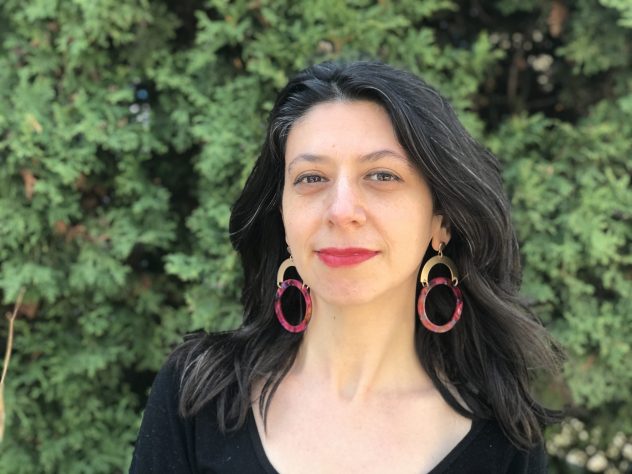 with Lisa Richter
Lisa Richter is a Toronto-based poet and educator. She is the author of two books of poetry, Closer to Where We Began (Tightrope Books, 2017) and Nautilus and Bone (Frontenac House, 2020), which won the Canadian Jewish Literary Award for Poetry, the National Jewish Book Award for Poetry (US), the Robert Kroestch Award for Poetry, and was longlisted for the Raymond Souster Award. Her poetry and creative nonfiction have appeared in numerous journals and anthologies, including Grain, The Malahat Review, the Literary Review of Canada, The New Quarterly, and Locations of Grief: An Emotional Geography (Wolsak and Wynn, 2020). In addition to teaching English as a second language, Lisa mentors emerging writers from under-represented communities with the Writers Collective of Canada.
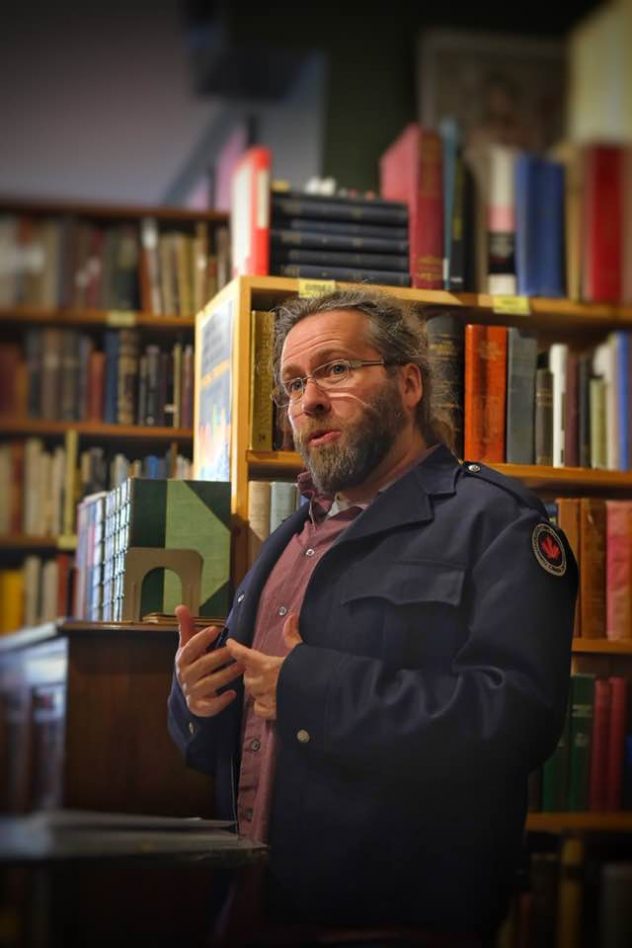
and D.A. Lockhart
D.A. Lockhart is the author of multiple collections of poetry and short fiction. His most recent work includes Bearmen Descend Upon Gimli (Frontenac House, 2021), Go Down Odawa Way (Kegedonce Press Press, 2021), and Breaking Right: Stories (Porcupine’s Quill, 2021). His work has appeared widely throughout Turtle Island including Best Canadian Poetry 2019, the Malahat Review, Grain, CV2, TriQuarterly, The Fiddlehead, ARC Poetry Magazine, and Belt. Along the way his work has garnered numerous Pushcart Prize nominations, National Magazine Award nominations, and Best of the Net nominations. He is a graduate of the Indiana University – Bloomington MFA in Creative Writing program where he held a Neal-Marshall Graduate Fellowship in Creative Writing. He is pùkuwànkoamimëns of the Moravian of the Thames First Nation. Lockhart currently resides at Waawiiyaatanong and Pelee Island where he is the publisher at Urban Farmhouse Press and poetry editor at the Windsor Review.
ONLINE SUMMER SCHEDULE ELEMENTS
- Classes usually meet for 1 to 2 hours each day.
- Sessions will likely take place in the late morning / early afternoon, to accommodate the various time zones of the writers taking each course.
- Each writer will also have 1-on-1 sessions scheduled with their instructor throughout the program.
- Faculty and participant readings, as well as other social activities, will take place at 5 pm CST.
- Other optional activities will be scheduled around class times.
- With online retreats, we understand that writers may continue to have responsibilities at home. We’ve found that the more time writers put into the program, including time set aside for personal writing and working with feedback received on their writing, the more they get out of the experience!
_________
Q & A with D.A. Lockhart
1) What’s the best writing advice you’ve ever received?
D.A.L: A few things, because I write in multiple genres and there are different critical bits of learning/advice I have gathered for both. Nothing you write is sacred. Challenge it, know that it is not perfect and will have to be revisited. Catherine Bowman and Tony Ardizzone taught this to me. Ardizzone being my thesis director had a profound influence on how I approach what I write and how I revise it. The second thing, lyric consciousness is what makes a poem successful in any form. Campbell McGrath gave this his hallmark lesson to me. A poem must contain the mind of the speaker and clearly communicate this to its reader. Basically, the mind of the reader must be able to move through the process of the poem to arrive somewhere. The real concept here is to recreate the living, breathing poet or speaker in words upon the page. Perhaps a distant third worth mentioning: you need to understand the rules, and illustrate this knowledge, before you break them. If you don’t understand how a sestina or Anglo-Saxon verse works, you can’t complain about or try to “fix” the form.
2) What’s the best short story or book you’ve recently read?
D.A.L: It wasn’t a recent release or anything, but John Ehle’s The Land Breakers was really enjoyable. It is the first novel in the series that explores a certain corner of Appalachia through a realist eye with a scent of myth and strong basis in history. One of the things I continue to long for is Appalachia and that offshoot culture of my Indiana background. I spent a lot of time in the Smoky Mountains as a kid and obviously moving back to Waawiiyaatanong from Indianapolis has left a great deal of longing for the place and its people. Ehle’s book answers that and really delivers on that classic epic literary fiction I’ve always loved. Really, it is one of those classic books that illustrates strong storytelling, character building, and offers us some view of contemporary world through the past. On the poetry side, I have been working through Jim Harrison’s Complete Poems. Which is kind of cheating because it is literally his entire collected body of poetry. And there is so much wonderful lyricism at work over the career of this truly remarkable writer. Again, with Harrison’s work there is the whole love affair and familiarity with
place as so much of the work touches on Montana and Michigan, two places I once called home, and continue to draw inspiration and joy from.
3) What character in literature do you relate to the most and why?
D.A.L: That is a fairly easy answer for me. Ralph Ellison’s protagonist narrator from Invisible Man. I could even say that he is a literary phantom to me, ever present. Likely because as I really started into being a writer, back in my Montana State University days, I was really on into jazz, which plays a very significant role in that character and that story, but also the physical space in which the character as writer and storyteller grows out of. There is something about being a writer in the physically distant space of a bunker that is familiar and undoubtedly led me to transform my basement into a writing bunker of sorts. My office, full of its vinyl jazz (and soul and hip hop) collection is actually a living homage to this. And the way that I envision my speakers and the way that I craft stories and lyrics and essays is through this relation if you will. I spin some Thelonious Monk or Sonny Rollins or Charles Mingus and try to poke and understand the society that birthed both me and my trauma, and work through the ways to heal that. All from a distance.
__________
Q & A with Lisa Richter
1) What time of day do you write and why?
LR: This tends to fluctuate, depending on my work schedule, but generally I find that I’m better at drafting new material in the morning after I’ve had my breakfast and coffee (I need fuel to get me started), and revising/rewriting in the evening, which for me is really the fun part. It seems in keeping with my body’s natural rhythms. I like to have time to reshape and revisit what I’ve written.
2) What’s the best short story or book you’ve recently read?
LR: I just finished reading British novelist Deborah Levy’s trilogy of memoirs, or “living autobiographies,” as she calls them: Things I Don’t Want to Know, The Cost of Living, and Real Estate. All three books are gorgeous, at times funny, at times heart-wrenching meditations on memory, autobiography, gender and the writing life. Her novel, The Man Who Saw Everything, was one of the most masterful books of fiction I’ve read in recent years! In terms of poetry, I’ve been doing a deep dive into avant-garde, innovative women poets in Canada, including Nicole Brossard, Lisa Robertson, Margaret Christakos, and Karen Mac Cormack, whose investigations into the nature of language itself – while not necessarily my primary concern in poetry – inspire me nonetheless.
3) How do you tackle writer’s block?
LR: This remains a huge struggle of mine, and I’ve begun to accept, even embrace the idea of fallow, that there are periods of time in which we are not meant to be writing. I also think we need to change the conversation, and reframe our notions of what writing looks like, and move away from a product-oriented mindset to a process one. I recently listened to an interview with the great Pulitzer Prize-winning poet Charles Simic, who is now in his eighties, in which he said, “I don’t sit down and say, ‘Now I’m going to write a poem. I scribble.” I fully endorse this act of scribbling, taking notes, writing a paragraph here, a stanza there, continuing to engage in some way with the act of artistic creation. I also endorse taking naps, making collages, writing handwritten letters, walking outside and listening to podcasts on a wide variety of subjects to expand your field of reference. I know this is all easier said than done, but worth remembering and putting into practice. When you remember to.
Sage Hill’s Summer Writing Courses are made possible
by generous donors, funders, and community partners.
Many thanks to the SK Arts, Canada Council for the Arts, SaskCulture, SaskLotteries, the Saskatchewan Book Awards, and the League of Canadian Poets.