
SUMMER FICTION COURSE | July 4 – 14, 2022
Instructed by YASUKO THANH
Summer programs will be offered online due to COVID-19.
Applications for the
2022 Spring & Summer Adult Programs are now closed.
Application Fee: $25
Tuition: $595
This is a facilitated course for six writers who have acquired and moved beyond basic skills in short or long fiction, who have published in periodicals, and who seek further development. The Fiction Course focuses on works in progress and offers group discussions and critiques, writing time, and individual critiques. Application is open to writers 19 years of age and older from Canada and abroad.
“I’ve loved my time at Sage Hill. The individual feedback was invaluable as was the time spent meeting other writers. Workshop sizes were small and perfect for learning and sharing! I’m informed, inspired and pumped to write more!”
– Diane Ferguson, 2021 Fiction Course Alum
“I feel invigorated and inspired by my time at Sage Hill. The brilliant feedback I received on my work was invaluable, and the bighearted community, a balm for these troubling times. Can’t wait to attend again.”
– Anonymous 2021 Fiction Course Alum
Click here for information on tuition
Click here for information on scholarships & bursaries
with Yasuko Thanh
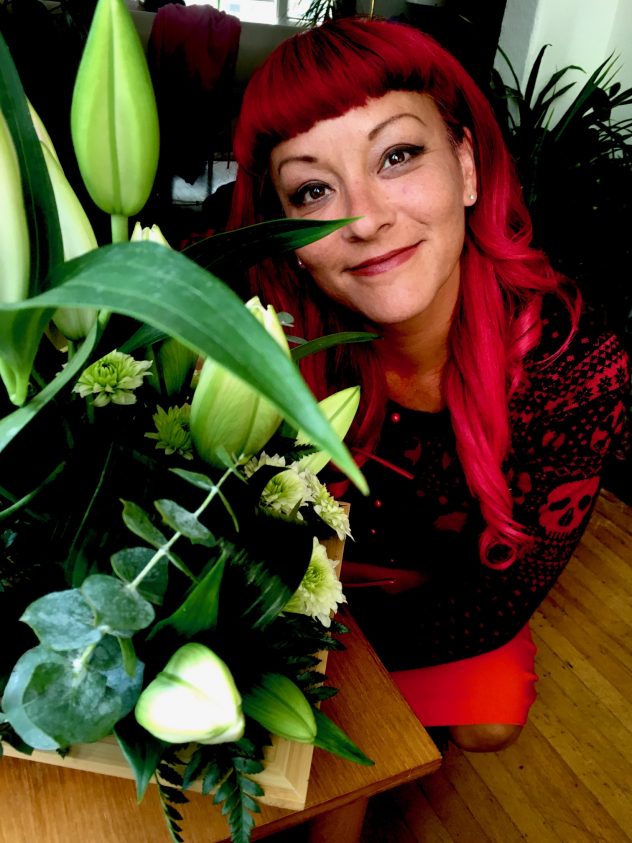 Yasuko Thanh is an award-winning novelist and short-story writer from Vancouver Island. She won the 2009 Journey Prize for the title story in her collection Floating Like the Dead. Her first novel, Mysterious Fragrance of the Yellow Mountains, a historical tale set in Vietnam, won the Rogers Writers’ Trust Fiction Prize in 2016. Her best-selling memoir, Mistakes to Run With, reflects on her journey from a runaway to prostitute to a successful writer. She lives in Victoria with her daughter. Her latest novel To the Bridge, about a woman whose teenage daughter has attempted suicide, is forthcoming with Penguin Random House in 2023.
ONLINE SUMMER SCHEDULE ELEMENTS
- Classes usually meet for 1 to 2 hours each day.
- Sessions will likely take place in the late morning / early afternoon, to accommodate the various time zones of the writers taking each course.
- Some classes may instead meet every second day if more writing time is needed between sessions.
- Each writer will also have 1-on-1 sessions scheduled with their instructor throughout the program.
- Faculty and participant readings, as well as other social activities, will take place at 5 pm CST.
- Other optional activities will be scheduled around class times.
- With online retreats, we understand that writers may continue to have responsibilities at home. We’ve found that the more time writers put into the program, including time set aside for personal writing and working with feedback received on their writing, the more they get out of the experience!
____________
Q & A with Yasuko Thanh
1) What’s the best writing advice you’ve ever received?
YT: Everyone has heard “Write what you know.” But Bill Gaston added something to the saying in one of his classes. Four extra words: “…to be the truth.” Write what you know to be the truth.
2) What’s the best short story or book you’ve recently read?
YT: I was recently blown away by two books, “Nishga” by Jordan Abel and “All We Want: Building the Life We Cannot Buy” by Michael Harris. Both are gems, nonfiction books with lyrical, poetic structures, and urgent messages we all need to hear.
3) How do you tackle writer’s block?
YT: Writers’ block? Oh, for me it’s the opposite. Some days I remind myself it’s OK not to write, the sky will not fall… urgency pulls me to the page. I realized, upon turning fifty, considering there is a finite amount of time and a plethora of ideas, that I have to start being selective about which projects I take on.
4) What time of day do you write and why?
YT: I think the best time of day to write, for me, is first thing in the morning, almost as if first thing in the morning I can sneak up on myself before my Monkey Brain wakes up and by the time my Monkey Brain gets rolling, I’m out, and making coffee. I urge students who are having trouble getting past the mean little editor that sits on their shoulder: write when you feel most out of yourself, whether that’s first thing in the morning or before you go to sleep at night.
5) What is the ideal environment for you to write in and why?
YT: The ideal environment? That’s a tricky one to answer because any environment can potentially be ideal. By looking at my work, how well it’s been flowing, whether I’m happy with what I’ve produced, and then checking what I’m surrounded by, I figure out my ideal environment moment by moment. I’m very superstitious. Mid-project, I will not rearrange the furniture, or switch computers. In some ways I feel like a high performance sports vehicle that — when everything is perfect, all the levels are right — runs really, really well but when one little thing is knocked out of whack, the car won’t even start.
6) What character in literature do you relate to the most and why?
YT: I fell in love with Margaret Laurence’s Morag when I was in my early twenties. I wanted to be like her, a tough woman, headstrong, independent, caring. I own all of Margaret Laurence’s books and they hold a special place on my shelf.
Sage Hill’s Summer Writing Courses are made possible
by generous donors, funders, and community partners.
Many thanks to the SK Arts, Canada Council for the Arts, SaskCulture, SaskLotteries, the Saskatchewan Book Awards, and the League of Canadian Poets.