
NONFICTION COURSE | July 4 – 14, 2022
Instructed by LORRI NEILSEN GLENN
Summer programs will be offered online due to COVID-19.
Applications for the
2022 Spring & Summer Adult Programs are now closed.
Application Fee: $25
Tuition: $595
This facilitated course is designed for six writers of creative nonfiction and memoir who have begun to publish in journals and want to go beyond the basics of the genre. Part workshop and part style incubator, in these sessions we will discuss ways to approach form, voice, and challenging material via the art of the particular. This course includes one-on-one meetings with the instructor and short lessons in freshening your approach and testing the limits of the genre. Application is open to writers 19 years of age and older from Canada and abroad.
“The ambience was cheerful, supportive, inspirational. The spirit of Sage Hill will carry me a long way forward in bringing my manuscript to completion. Lorri Neilsen Glenn is the best writing instructor I have ever had: wise, gentle, super-knowledgeable, supportive, challenging, funny, a phenomenal woman!”
– Troni Grande, 2021 Nonfiction Course Alum
“Lorri is amazing. Her approach is very organic and shifted with the needs of the class. I always felt she was creating a supportive and dynamic container for us to explore all things CNF.”
– Anne Marie Nakagawa, 2021 Nonfiction Course Alum
Click here for information on tuition
Click here for information on scholarships & bursaries
with Lorri Neilsen Glenn
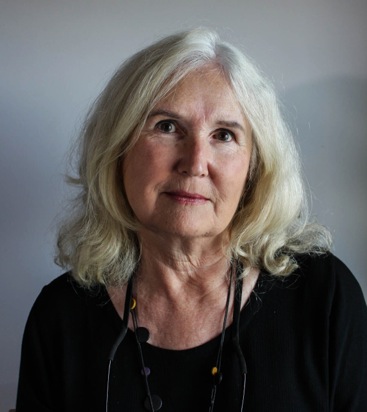
Lorri Neilsen Glenn’s most recent full-length work is the award-winning Following the River: Traces of Red River Women (Wolsak and Wynn, 2017), a hybrid work exploring the lives of her Ininiwak and Métis grandmothers and their contemporaries. Former Halifax Poet Laureate, Lorri is a mentor in the University of King’s College MFA in Creative Nonfiction program and Professor Emerita at Mount Saint Vincent University. She is the author and contributing editor of fourteen collections of poetry, creative nonfiction and scholarly work, and has received awards for her innovative teaching, ethnographic research and her work in the arts. Lorri’s essays and poetry have appeared in The Malahat Review, Prairie Fire, Event, Grain, CV2, among other journals and anthologies, and her poetry has been adapted for libretti. A Red River Métis, Lorri is a U of S grad and lived on the Prairies before moving to Nova Scotia in the 80s. Find her @neilsenglenn
ONLINE SUMMER SCHEDULE ELEMENTS
- Classes usually meet for 1 to 2 hours each day.
- Sessions will likely take place in the late morning / early afternoon, to accommodate the various time zones of the writers taking each course.
- Some classes may instead meet every second day if more writing time is needed between sessions.
- Each writer will also have 1-on-1 sessions scheduled with their instructor throughout the program.
- Faculty and participant readings, as well as other social activities, will take place at 5 pm CST.
- Other optional activities will be scheduled around class times.
- With online retreats, we understand that writers may continue to have responsibilities at home. We’ve found that the more time writers put into the program, including time set aside for personal writing and working with feedback received on their writing, the more they get out of the experience!
Q & A with Lorri Neilsen Glenn
1) How do you tackle writer’s block?
LNG: Writer’s Block? Is there such a thing? When I futz around doing anything but keyboarding it’s often because I’m not ready to say anything yet—my thinking is only nascent or I need more information. Or I need the psychological space to have a thought without the world storming in. For some, writer’s block is fear of writing badly, or having to face difficult emotions, or carrying a finger-wagging gremlin on their shoulder. Regardless, I try to keep moving – reading, writing, researching, walking, discussing, any activity that will help support what I’m working on.
2) What time of day do you write and why?
LNG: Best writing time? Anytime I can free up my mind to focus. I’m learning to say ‘no’ to requests more often, which helps. My writing brain works best in the morning and early afternoon, but if pressed I can produce words any time of day. But writing in the larger sense — paying attention, thinking, exploring ideas– happens all day anywhere. Who among us hasn’t walked into a room, eyes off in the middle distance, a signal to others we’re “still in the zone”?
3) What’s the best writing advice you’ve ever received?
LNG: Best advice? Three top pieces of advice I have either given or received:
1. The best way out is through (keep going, even if you take side roads or get lost or have to bushwhack or backtrack for some time). (Patience).
2. Don’t censor yourself early on. Write it all, the whole pillow-biting cringy soggy mess of it and deal with any cutting or culling later. You can’t write your story unless you see the full gobsmacking epic wretched whole of it—its breadth and depth. (Patience).
3. Prepare for the long haul—you might need 10 drafts, three structural revisions, you might need months or years. Make sure you cultivate good company for the trip. (Patience).
Sage Hill’s Summer Writing Courses are made possible
by generous donors, funders, and community partners.
Many thanks to the SK Arts, Canada Council for the Arts, SaskCulture, SaskLotteries, the Saskatchewan Book Awards, and the League of Canadian Poets.